
Batteries Recharged Without Electrical Damage
Jump Start Services in Somerville for vehicles disabled by dead batteries in parking areas, garages, or roadside locations
Cold overnight temperatures drain battery charge below the threshold needed to turn starter motors, or interior lights left on overnight deplete stored energy until ignition systems fail to engage. Quick Tow Solutions responds to jump start requests across Somerville, Boston, and surrounding areas when dead or weak batteries leave drivers unable to start their vehicles. The service operates continuously with experienced technicians who arrive carrying commercial battery packs or jumper cables connected to properly maintained service vehicles that deliver sufficient current to restart engines without damaging sensitive electrical components.
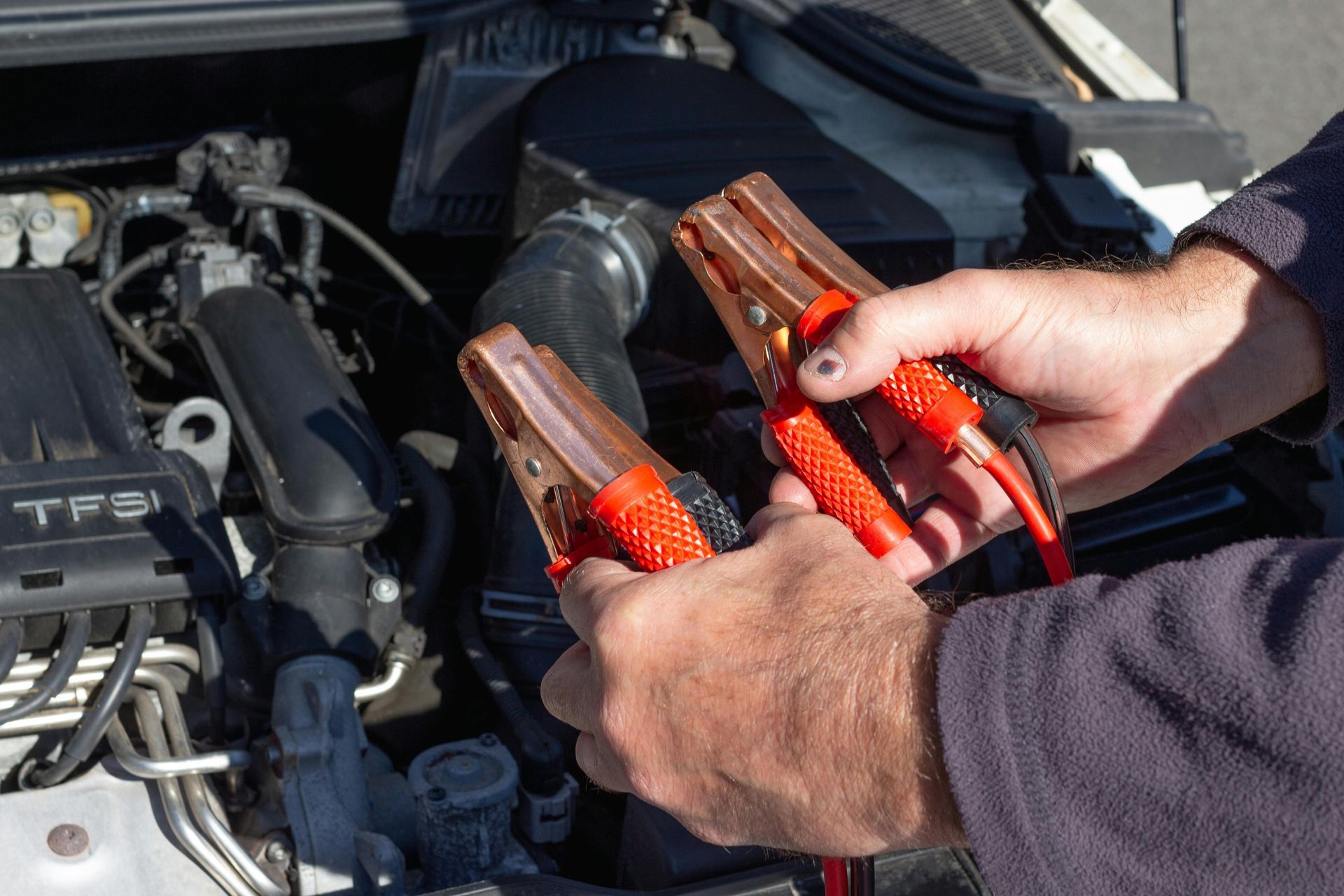
Jump start services restore temporary electrical power to vehicles with discharged batteries by connecting an external power source that supplies the voltage and amperage needed to crank the engine and recharge the battery through the alternator. The process involves identifying correct battery terminals, connecting cables in the proper sequence to prevent voltage spikes, and monitoring charging current to avoid overheating battery cells or triggering electrical system faults in vehicles with computerized engine controls.
Request immediate dispatch for jump start support if your vehicle currently will not start and you suspect battery failure.
Why Battery Failures Happen and What Jump Starts Accomplish
Batteries fail when internal plates sulfate from age, electrolyte levels drop below the minimum needed for chemical reactions, or extreme cold temperatures reduce available cranking amperage below the threshold required to spin starter motors under engine compression load. Jump starting provides external electrical current that compensates for the battery's temporary inability to deliver adequate power, allowing the engine to start and the alternator to begin recharging the battery through normal operation. The service addresses immediate starting failures but does not repair underlying battery deterioration, meaning vehicles with batteries older than four years or showing signs of internal damage may require jump starts repeatedly until the battery is replaced.
After the jump start completes, your engine runs normally and the electrical system operates accessories like headlights, climate control, and audio equipment without interruption. Your battery begins accepting charge from the alternator, though you should drive continuously for at least 30 minutes to restore sufficient charge for the next cold start. Technicians with decades of combined towing and roadside experience recognize symptoms that indicate battery replacement rather than temporary discharge, and they communicate those findings so you can make informed decisions about whether additional service becomes necessary.
The company operates fully licensed and insured vehicles equipped for safe electrical work, and all services follow procedures that protect vehicle computer systems from voltage surges that erase adaptive memory or damage control modules. Honest pricing and professional communication remain priorities under new family ownership, and technicians explain what caused the battery failure and what steps prevent recurrence.
Answers to Frequent Service Questions
Jump start services involve electrical safety, battery condition assessment, and post-service driving requirements that affect how reliably your vehicle operates after technicians restore starting ability.
What causes batteries to fail more often during winter?
Cold temperatures slow the chemical reactions inside battery cells that produce electrical current, reducing available cranking amperage by up to 50 percent when ambient temperatures drop below freezing, while engine oil thickens and increases the resistance starter motors must overcome to rotate crankshafts.
How do technicians prevent electrical damage during jump starts?
Operators connect jumper cables to battery terminals in a specific sequence—positive to positive first, then negative to a grounded metal surface rather than directly to the dead battery's negative terminal—which prevents voltage spikes that can damage vehicle computers when the circuit completes.
Why might a vehicle need repeated jump starts?
Batteries lose the ability to hold a charge as internal plates deteriorate from age, typically after four to five years of service, and alternators that fail to produce adequate charging voltage allow batteries to discharge during normal driving, creating a cycle where the battery never fully recharges between trips.
What should I do immediately after receiving a jump start?
Drive the vehicle continuously for at least 30 minutes without turning off the engine, allowing the alternator to recharge the battery sufficiently for the next start, and avoid using high-draw electrical accessories like heated seats or rear defrosters until the battery voltage stabilizes.
How does jump start service differ across vehicle types?
Passenger cars and SUVs typically require 400 to 600 cold cranking amps to start, while commercial vehicles and diesel trucks may need 800 to 1,200 amps due to larger engine displacement and higher compression ratios, requiring technicians to use heavy-duty battery packs or multiple parallel connections to deliver sufficient current.
Quick Tow Solutions provides fast dispatch support for residential areas, parking lots, office buildings, highways, and busy city streets where battery failures strand drivers. Call (857) 346-3364 whenever battery problems prevent your vehicle from starting and you need immediate professional assistance.